

Latest News
Jean Taylor’s Fight for Justice Continues as Chantel’s Murderer Is Recalled to Prison
Oct
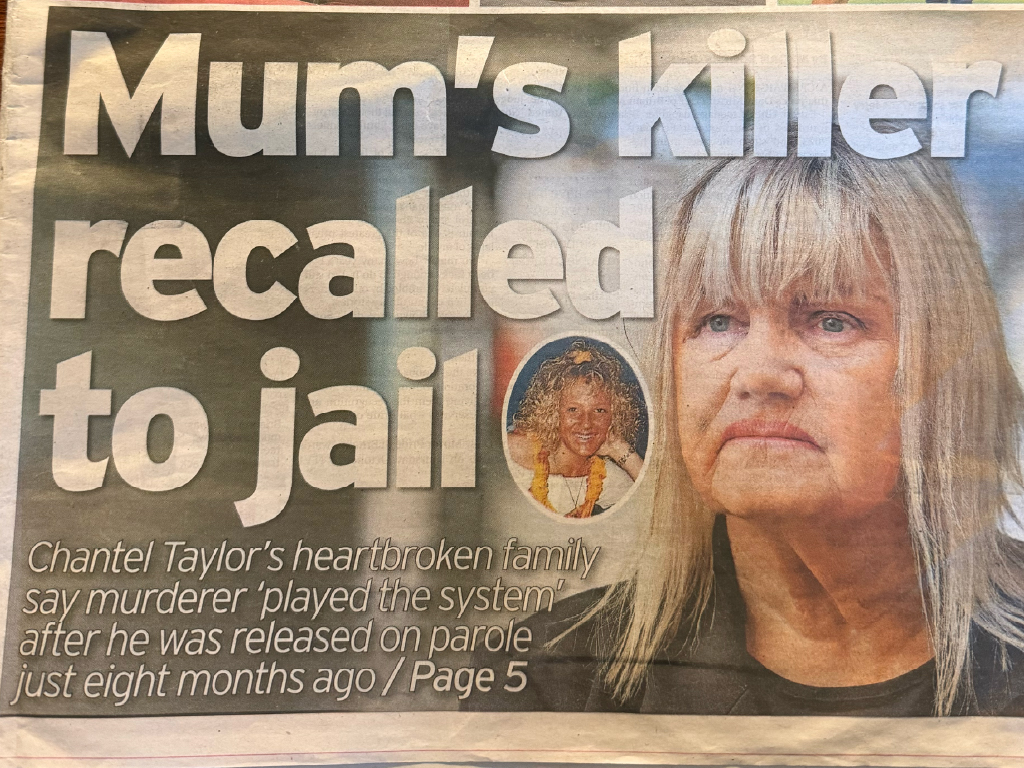
Families Fighting for Justice founder Jean Taylor has once again spoken publicly about her fight for justice following the news that Stephen Wynne, the man who murdered her daughter Chantel Taylor in 2004, has been recalled to prison just eight months after being released on parole.
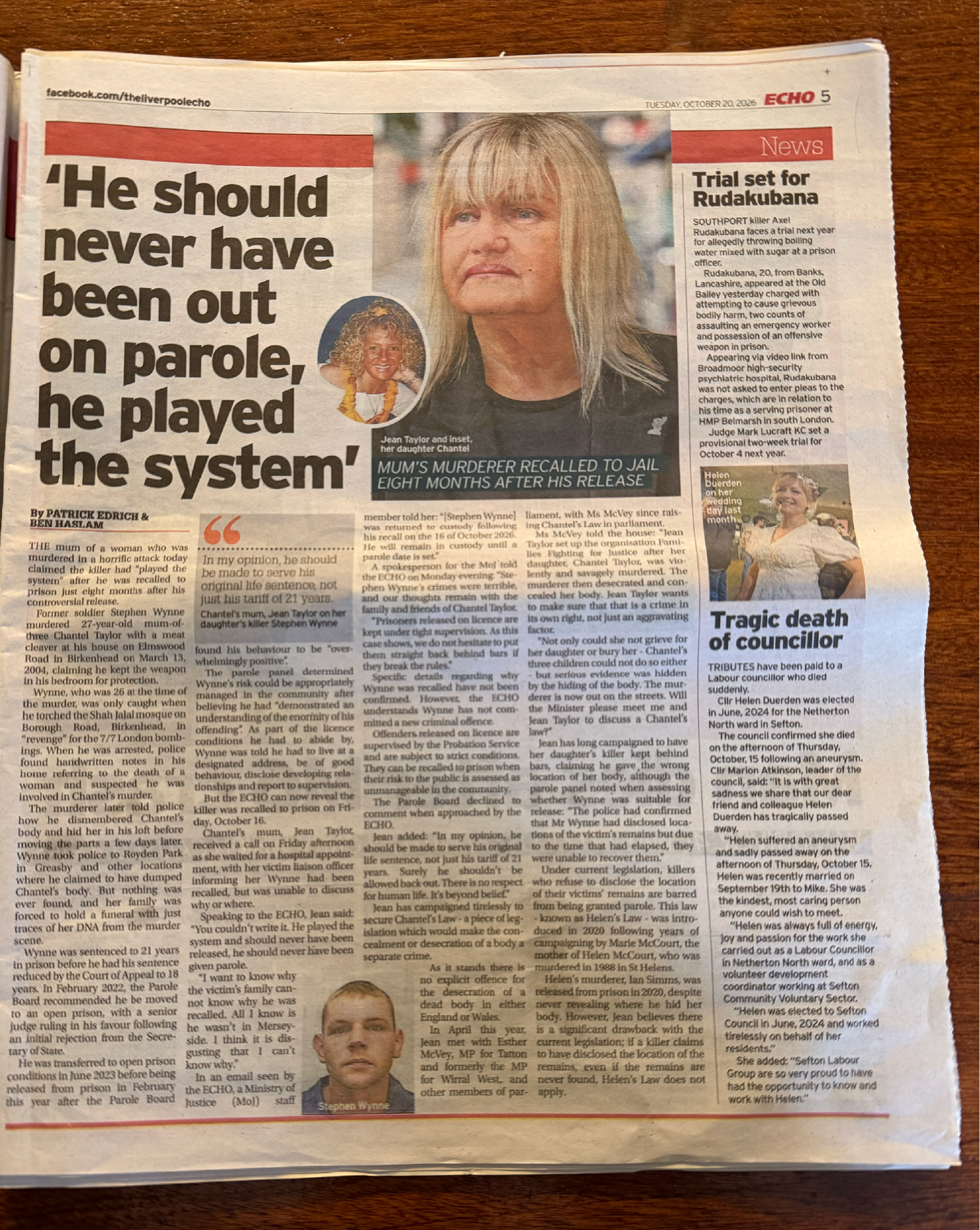
The story made the front page of the Liverpool Echo on Tuesday 20 October 2026, with further coverage inside the newspaper highlighting Jean’s concerns about the decision to release Wynne and her continuing campaign for Chantel’s Law.
For Jean and her family, this latest development has brought renewed attention to questions they have been raising for more than two decades about sentencing, parole and the treatment of families affected by homicide.
Stephen Wynne Recalled to Prison
Stephen Wynne murdered 27-year-old mother-of-three Chantel Taylor in Birkenhead in March 2004. Following her murder, he dismembered her body and disposed of her remains, which have never been recovered.
Wynne pleaded guilty to murder and was sentenced to life imprisonment in January 2006, initially receiving a minimum term of 21 years. This was later reduced to 18 years following an appeal.
Earlier this year, Wynne was released on parole, a decision that Jean and her family strongly opposed.
According to the Liverpool Echo’s report, Wynne has now been recalled to custody following concerns about his behaviour and whether the risks he presented could be appropriately managed in the community.
The recall has once again raised questions for Jean about the decisions made throughout the parole process and whether sufficient consideration was given to the concerns of Chantel’s family.
Jean Taylor Speaks Out
Speaking to the Liverpool Echo, Jean expressed her frustration and anger over Wynne’s release, making clear that she believes he should never have been granted parole.
For Jean, the latest development has reinforced concerns she has raised repeatedly about the criminal justice system and the decisions that affect victims’ families long after a murder has taken place.
The impact of these decisions goes far beyond the offender. Families must live with the knowledge that the person responsible for taking their loved one’s life may return to the community, while they continue to carry the lifelong consequences of their loss.
Jean has spent years challenging decisions she believes fail to recognise the full extent of the suffering caused to families such as hers.
Remembering Chantel Taylor
Behind the newspaper headlines and legal proceedings is the life of Chantel Taylor, a much-loved daughter and mother of three whose future was taken away in the most horrific circumstances.
Chantel was just 27 years old when she was murdered.
Her family have never been able to recover her body or lay her to rest in the way they would have wished. The pain of not knowing where her remains are has added another devastating burden to an already unimaginable loss.
For Jean, Chantel’s children and the wider family, the consequences of her murder have never gone away.
Every birthday, anniversary and family occasion is a reminder of the person who should still be with them.
Chantel was more than a victim of crime. She was a daughter, a mother and a loved member of her family. Her life matters, and her story remains at the heart of Jean’s continuing fight for justice.
Why Chantel’s Law Remains So Important
For many years, Jean has campaigned for the introduction of Chantel’s Law, calling for stronger legal recognition and punishment when a murderer desecrates, dismembers or conceals a victim’s body.
Under the current sentencing framework, such actions can be considered aggravating factors when determining the sentence for murder. However, Jean believes these acts should be recognised as separate criminal offences, reflecting the additional harm caused to victims and their families.
The campaign also raises important concerns about the destruction of potential evidence and the unanswered questions families can be left with when a victim’s body is concealed or never recovered.
Jean has called for substantially tougher sentencing in these circumstances, including a proposed minimum term of 40 years before parole can be considered.
Her campaign is not simply about one case. It is about seeking changes that could protect other families from experiencing the same additional suffering.
Through Families Fighting for Justice, Jean continues to raise awareness, seek political support and campaign for meaningful changes within the criminal justice system.
A Fight That Has Continued for More Than Two Decades
Jean’s determination has helped bring national attention to the issues surrounding sentencing, parole and the rights of victims’ families.
Her campaign has been highlighted through newspaper articles, television interviews and discussions with political representatives, yet the central message has remained the same.
Families deserve to be heard. Victims deserve dignity. And the justice system must recognise the lifelong consequences of homicide.
The latest Liverpool Echo coverage is another reminder of why Jean continues to speak out, even after more than 20 years of fighting for change.
Families Fighting for Justice Will Continue to Campaign
Families Fighting for Justice was founded through personal tragedy and has grown into an organisation dedicated to supporting families affected by homicide while campaigning for improvements within the justice system.
We understand that for families, the pain does not end when a sentence is handed down. Court proceedings, appeals, parole hearings and decisions about an offender’s release can bring renewed distress many years after the original crime.
Families need to know that their voices matter and that their concerns will be taken seriously.
For Jean Taylor and her family, the fight for justice has never ended. More than two decades after Chantel’s murder, the pain remains, the questions remain, and the campaign for Chantel’s Law continues.
Families Fighting for Justice will continue to stand alongside victims’ families and campaign for a justice system that recognises the full impact of homicide and the lifelong suffering it leaves behind.
